
How Can You Reduce Pool Water Loss During Late-Summer Heat in DFW?
DFW homeowners can reduce late-summer pool water loss by covering the pool when practical, limiting splash-out, managing water features, maintaining an appropriate water level, and monitoring how quickly the level drops. Some evaporation is expected during hot weather, but persistent or unusual water loss should be evaluated rather than automatically blamed on the Texas heat.
Texas Outdoor Oasis has more than 20 years of outdoor living experience in the Dallas-Fort Worth area, helping homeowners create and maintain custom pools and complete backyard retreats. Because pools are part of a larger outdoor environment, factors such as sun exposure, wind, water features, landscaping, and how a family uses the pool can all influence water consumption. Our goal is to help homeowners understand what they are seeing before jumping to conclusions. A falling water level does not automatically mean there is a leak, but a consistent change that cannot be explained by weather or pool use deserves attention. Texas Outdoor Oasis provides custom pool construction and remodeling for homeowners throughout communities including Wylie, Rockwall, Plano, Frisco, Allen, McKinney, Richardson, and other DFW areas.
How to Reduce Swimming Pool Evaporation and Unnecessary Water Loss
Late summer puts DFW pools through demanding conditions. National Weather Service climate normals for Dallas-Fort Worth show an August normal high temperature of about 95.8 degrees Fahrenheit. Those temperatures, combined with sunshine, wind, warm pool water, and frequent swimming, can contribute to noticeable evaporation.
The U.S. Environmental Protection Agency identifies evaporation, leaks, cleaning, and splashing as important sources of pool water consumption. The key for homeowners is determining which sources can be controlled and whether the amount of water being lost appears consistent with current conditions.
How Can You Tell Normal Pool Evaporation From a Possible Leak?
Start by tracking the water level instead of relying on memory. Evaporation varies with temperature, humidity, wind, water temperature, pool exposure, and other conditions, so there is no single daily water-loss number that reliably diagnoses every DFW pool.
For a simple comparison, homeowners can use a bucket-style evaporation test. Place a bucket containing pool water on a pool step or another stable location, mark the water level inside the bucket, and mark the pool’s water level. After allowing both to experience the same weather conditions, compare the changes.
If the pool and bucket lose roughly comparable amounts, evaporation may be playing a significant role. If the pool consistently drops substantially more than the bucket, further investigation may be appropriate. A bucket test is a screening tool, not a professional leak diagnosis.
Also watch for patterns such as:
- A water level that continues falling unusually quickly
- Repeatedly needing to add more water than expected
- Persistent wet or unusually soggy areas near the pool
- Air bubbles appearing in return lines or the pump strainer
- Water loss that seems to change depending on whether pool equipment is running
EPA WaterSense guidance notes that wet spots around a pool and air bubbles in the return line or pump strainer can be signs associated with leakage. These observations do not identify the location or cause by themselves, so inspection is still important.
What Is the Best Way to Reduce Pool Evaporation in Hot Weather?
Using a pool cover when the pool is not in use is one of the most effective ways to reduce evaporation. EPA WaterSense reports that properly used pool covers can prevent up to 95 percent of pool water evaporation, although actual performance depends on the cover and how consistently it is used.
That can be especially valuable during late summer in North Texas, when a pool may sit exposed to high temperatures and sunshine for hours between swimming sessions.
Other practical steps include:
- Reduce unnecessary wind exposure. Appropriate fences, walls, or thoughtfully designed landscaping can help reduce air movement across the water surface. EPA guidance also notes that landscaping and physical barriers can provide wind protection.
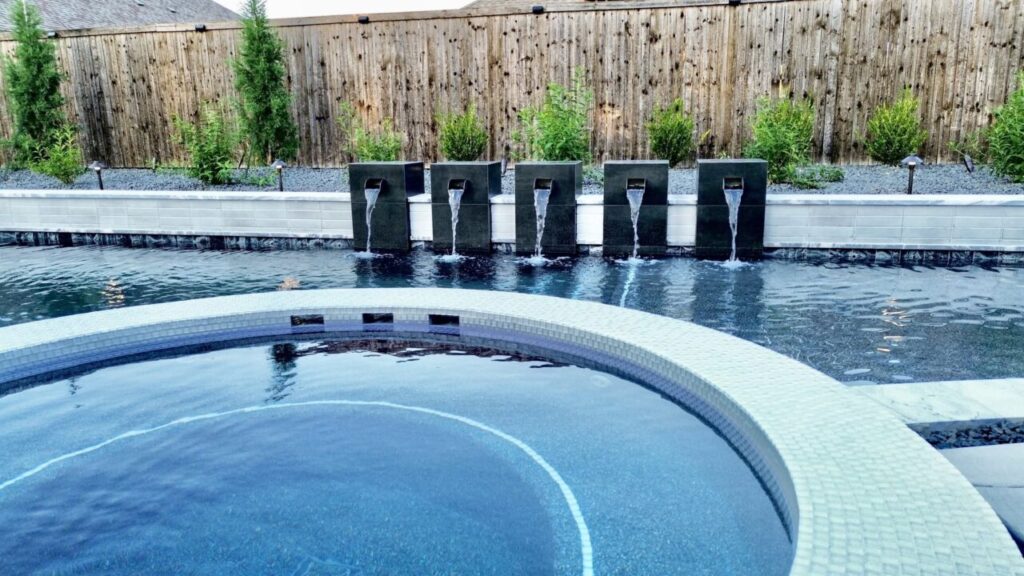
- Use water features intentionally. Fountains, sprays, and waterfalls increase the amount of water exposed to moving air. Consider running them when you are enjoying the pool rather than continuously.
- Avoid unnecessarily high water temperatures. Warmer water can increase evaporation, particularly when there is a large difference between water and air conditions.
- Provide strategic shade where appropriate. Shade can help limit direct solar heating while also making the surrounding outdoor space more comfortable.
For homeowners planning a new pool or remodel, these factors can be considered during the design stage rather than addressed only after the pool is complete.
How Can You Reduce Water Lost From Splashing and Pool Use?
Keeping the pool from being overfilled is a simple way to reduce water lost through splash-out. A pool filled too close to the overflow point can lose more water when swimmers jump, play, or move through the water.
EPA home-maintenance guidance recommends maintaining the water level at least four inches below the pool edge to help minimize splash losses. Homeowners should still follow the operating requirements appropriate for their specific pool and skimmer system.
You can also reduce unnecessary water loss by:
- Discouraging excessive water being deliberately splashed onto the deck
- Checking automatic fill equipment to make sure it is operating correctly
- Avoiding unnecessary draining and refilling
- Cleaning filters based on actual need and equipment guidance rather than automatically over-cleaning them
These steps may seem small, but they help separate routine pool use from avoidable water consumption.
When Should Persistent Pool Water Loss Be Professionally Inspected?
Consider professional evaluation when the pool continues losing more water than weather and normal use reasonably explain, especially when the pattern is consistent. Do not assume that a hot DFW week explains every change in water level.
A pool contains multiple components that may need to be evaluated, including plumbing, fittings, equipment, surfaces, seals, skimmers, and water features. Determining the actual source of water loss may require systematic testing rather than visual inspection alone.
An experienced pool professional can evaluate the overall system and recommend appropriate next steps based on what is actually found.
The important distinction is that unusual water loss is a reason to investigate, not proof of a particular leak or repair need.
Frequently Asked Questions About Pool Water Loss in DFW
How much pool water loss is normal during a Texas summer?
There is no universal amount that applies to every pool. Temperature, humidity, wind, pool temperature, surface area, shade, water features, and swimming activity all affect water loss, which is why monitoring your own pool over time is more useful than relying on a single rule of thumb.
Does a dropping pool level always mean there is a leak?
No. Evaporation and splash-out naturally lower pool water levels. If the loss is persistent, unusually rapid, or significantly different from an evaporation comparison, professional inspection may be warranted.
Do waterfalls and fountains increase pool water loss?
They can. Water features expose more water to air movement and can increase evaporation, particularly during hot, dry, or windy conditions. Running them only when they are being enjoyed can help reduce unnecessary water loss.
Is a pool cover worth using during a DFW summer?
For reducing evaporation, a properly used cover can make a substantial difference. EPA WaterSense states that pool covers can prevent up to 95 percent of evaporation, making covering the pool when practical one of the strongest water-conservation measures available to homeowners.
Protect Your DFW Pool Through the Rest of Summer
Late-summer water loss does not have to become a guessing game. Monitor the pool consistently, reduce avoidable evaporation and splash-out, and pay attention when the water level changes in a way that does not match weather or normal use.
If persistent water loss has you questioning whether your pool needs professional attention, contact Texas Outdoor Oasis to discuss your pool and the appropriate next steps.